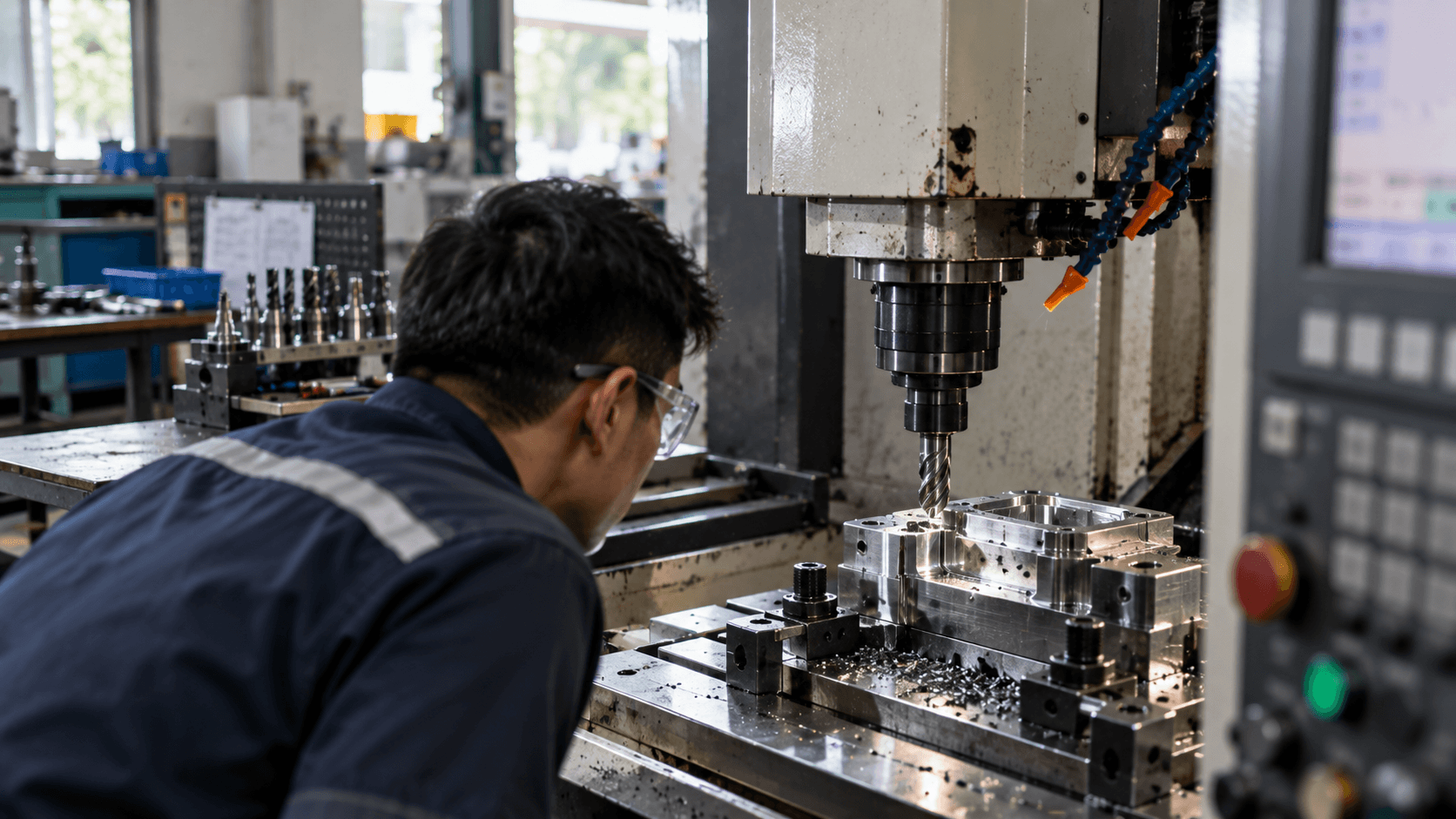
Where is precision tooling and CNC machining actually heading in 2026? The short answer: AI-assisted process control, predictive tool management, and tighter integration between tooling and machine data are moving from pilot projects into standard practice.
For manufacturers sourcing precision tooling and CNC cutting tools, understanding these shifts now shapes which suppliers and tool specifications make sense for the year ahead.
Key Takeaways
- AI-assisted machining is shifting from experimental pilots to routine use, with systems adjusting cutting parameters in real time based on vibration, load, and temperature.
- Predictive tool management uses spindle load and vibration data to estimate tool life, enabling replacement before failure rather than after.
- Automation and lights-out machining — robotic loading, automated pallet changers, and minimal-intervention runs — continue to expand across CNC shops.
- Digital twins are increasingly used to validate machining processes virtually before cutting begins on real material.
- High-mix, low-volume production and multi-axis adoption are accelerating, pushing demand for more flexible tooling setups.
- Advanced coatings and carbide tooling continue improving the ability to machine harder materials with greater accuracy and consistency.
- Reported productivity and tool-life gains from these trends vary widely by source — treat specific percentage claims as directional rather than guaranteed.
Trend 1: AI Moving from Pilot Projects into Daily Machine Control
AI-assisted machining is increasingly described as a standard part of daily operations rather than an experimental add-on. Modern systems can adjust cutting parameters mid-cut, responding to vibration, load, or temperature changes as they happen, rather than relying solely on pre-programmed static parameters.
For manufacturers, this means tooling increasingly needs to perform predictably across a wider range of real-time adjustments, not just fixed, pre-validated conditions.
Trend 2: Predictive Tool Management
Rather than replacing cutting tools on a fixed schedule or waiting for visible wear, predictive tool management uses spindle load, vibration, and cutting force data to estimate when a tool is approaching the end of its usable life. This shifts tool replacement from reactive to proactive — reducing unplanned downtime and scrap caused by tools failing mid-cycle.
For tooling suppliers and buyers alike, this trend increases the value of consistent, well-documented tool specifications that make predictive models more reliable.
Trend 3: Automation and Lights-Out Machining
Shops are increasingly adding robotic loading and unloading, automated pallet changers, and lights-out machining routines that run with minimal human oversight. This trend raises the bar for tooling reliability, since unattended runs leave less room for a human operator to catch a developing tool issue before it causes a defect or a damaged workpiece.
Trend 4: Digital Twins for Process Validation
Digital twins — virtual models of a machining process — are increasingly used to validate toolpaths, cutting parameters, and tool selection before a single part is cut on real material. This reduces costly trial-and-error on the shop floor and allows tooling choices to be tested against simulated conditions earlier in the process.
Trend 5: High-Mix, Low-Volume Production and Multi-Axis Adoption
Market analysis points to high-mix, low-volume production as a defining driver of current CNC demand, alongside accelerating adoption of multi-axis machines across sectors that previously defaulted to 3-axis equipment. This shift favours tooling setups that can handle more frequent changeovers between part types without sacrificing precision — a direct contrast to high-volume, single-part-type production runs where tooling is optimised for one job over a long run.
Trend 6: Advanced Coatings and Carbide Tooling for Harder Materials
Improvements in coatings and carbide tooling continue to expand what’s machinable with consistent accuracy, particularly as manufacturers work with harder, more specialised materials.
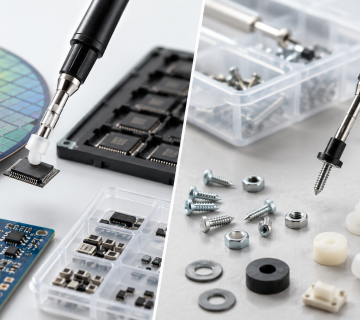
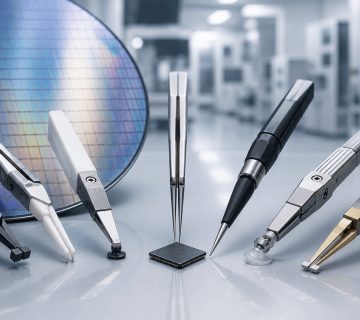
This mirrors a pattern already well established in precision semiconductor tooling, where tungsten carbide and advanced coatings are chosen specifically for wear resistance and dimensional stability under repeated high-cycle use — the same underlying material science driving advances across broader CNC manufacturing.
What This Means for Buyers of CNC Cutting Tools and Precision Tooling
These six trends aren’t abstract industry shifts — each one changes a concrete factor in how tooling should be specified, sourced, and managed.
AI-assisted machining means tooling can no longer be selected purely against a single fixed cutting parameter set. Because systems now adjust speed, feed, and other parameters mid-cut in response to real-time conditions, tools need to maintain dimensional stability and wear resistance across a wider operating envelope than static programming once required. Buyers should ask suppliers whether tooling has been validated across variable, not just nominal, cutting conditions.
Predictive tool management raises the value of documentation. A predictive model is only as accurate as the data behind it — tool material certifications, wear curves, and batch-to-batch consistency all feed into how reliably a system can forecast remaining tool life. Buyers working with or planning to adopt predictive maintenance should prioritise suppliers who can provide this level of specification detail, not just a part number and a price.
Lights-out automation shifts risk tolerance. In a supervised run, a human operator might catch early signs of tool wear or a developing defect before it causes real damage. In an unattended run, that safety net disappears — meaning tool reliability and consistency across a full batch matter more than they would in a closely monitored process. This argues for sourcing tools with tighter manufacturing tolerances and more rigorous quality control, even at a higher unit cost.
Digital twins change how tooling decisions get tested before committing to a production run. Buyers who have access to simulation environments can validate a new tool’s expected performance virtually, reducing the cost of trial-and-error on physical material — but this only works if the tooling supplier can provide accurate material and geometry data to feed into the simulation.
High-mix, low-volume production pushes buyers toward tooling flexibility over single-job optimisation. A tool chosen purely for peak performance on one long production run may be a poor fit if the shop floor is shifting toward frequent changeovers between part types — buyers should weigh changeover speed and versatility alongside raw performance metrics when specifying tooling for this kind of environment.
Advanced coatings and carbide grades mean buyers machining harder or more specialised materials should treat grade and coating selection as application-specific decisions rather than defaulting to a general-purpose tool across every job. The wear-resistance gains from matching tooling precisely to material hardness and cutting conditions compound significantly over high-cycle production.
| Trend | Implication for Tooling Buyers |
|---|---|
| AI-assisted machining | Tools need to perform predictably across real-time parameter adjustments |
| Predictive tool management | Consistent, well-documented tool specs improve prediction accuracy |
| Lights-out automation | Tool reliability matters more when no operator is present to catch issues |
| Digital twins | Tool selection can be validated virtually before physical trial cuts |
| High-mix, low-volume production | Flexible tooling setups matter more than single-job optimisation |
| Advanced coatings and carbide | Harder, more specialised materials require tooling matched to the application |
Best Practices for Staying Ahead in 2026
- Work with tooling suppliers who can provide consistent, well-documented specifications to support predictive maintenance programmes
- Evaluate tooling flexibility for high-mix production, not just performance in a single long-run application
- Prioritise coating and carbide grade selection matched to the specific material being machined, rather than defaulting to a general-purpose grade
- Validate new tooling choices against simulated or digital twin environments where available before committing to a full production run
- Review tool reliability requirements for any lights-out or low-supervision machining processes
Frequently Asked Questions
Is AI-assisted machining only relevant for large manufacturers?
No — while early adoption has concentrated among larger shops, the underlying principles (real-time parameter adjustment, predictive tool wear tracking) are increasingly accessible as the technology matures, and tooling suppliers are adapting specifications accordingly.
Do these trends change how I should select carbide tooling?
Yes, to an extent — as machining increasingly targets harder, more specialised materials and higher-mix production schedules, matching carbide grade and coating to the specific application matters more than relying on a single general-purpose grade across all jobs.
How reliable are the productivity gains reported for AI-driven CNC machining?
Reported figures vary significantly across sources and are often vendor-sourced rather than independently verified — treat specific percentage claims as directional indicators rather than guaranteed outcomes for your own operation.
Conclusion: Precision Tooling Decisions Are Becoming More Data-Driven
The common thread across all these 2026 trends is that tooling decisions are increasingly informed by real-time data, predictive models, and simulation — rather than fixed schedules and general-purpose specifications alone. Manufacturers sourcing precision tooling and CNC cutting tools stand to benefit most by working with suppliers who understand how tooling specifications interact with these broader process shifts.
LeaderHiTech’s experience supplying precision tooling for advanced semiconductor applications reflects the same material science driving broader CNC tooling advances.
To discuss tooling specifications for your application, Contact Us Now, or explore our full product range.