Category: Die Bond Tools
The Epoxy Stamping Tool, also known as a transfer or printing tool, is designed for precise epoxy application on large dies, ranging from 1×1 mm to 50×50 mm in size. These tools are essential for dispensing epoxy in complex patterns required by modern die designs. We offer a variety of nozzle patterns tailored to different dispensing needs, ensuring compatibility with a wide range of epoxy viscosities and application requirements.
Our Epoxy Stamping Tools are customizable, allowing for the creation of complex designs for special applications. The choice of nozzle design and configuration is based on factors like epoxy viscosity and dispensing pattern, ensuring optimal performance and accuracy.
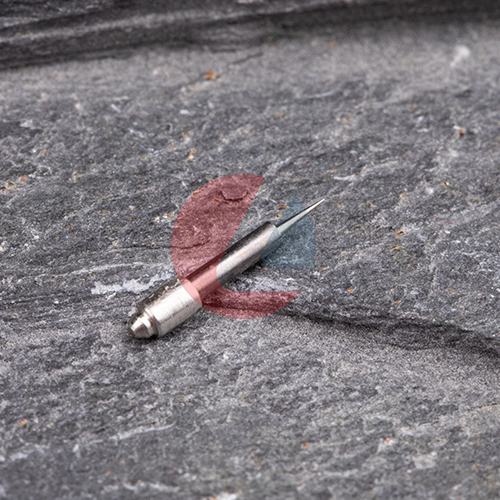
Our Variety of Epoxy Stamping Tools (EST)
Round ASM Stamping Tools
Round stamping tools provide controlled epoxy transfer for applications requiring circular or point-based deposits.
Micro Series Shank 1.50mm (Tip size: <4mil)
Series Shank 1.50mm (Tip size: >4mil)
Multi-Pin ASM Stamping Pins
Multi-pin stamping tools transfer several epoxy points during a single stamping operation.
Shank 1.50mm
Shank 2.20mm
Single-Pin ASM Stamping Pin
Leader HiTech also provides single-pin stamping tools with a 2.20 mm shank for applications requiring a more concentrated or individually controlled epoxy deposit.
Shank 2.20mm
Examples of epoxy stamping tools available include Twin Fork Tips, Fork Tips, Flat Tips, and Round Tips, each designed for specific applications in semiconductor manufacturing.
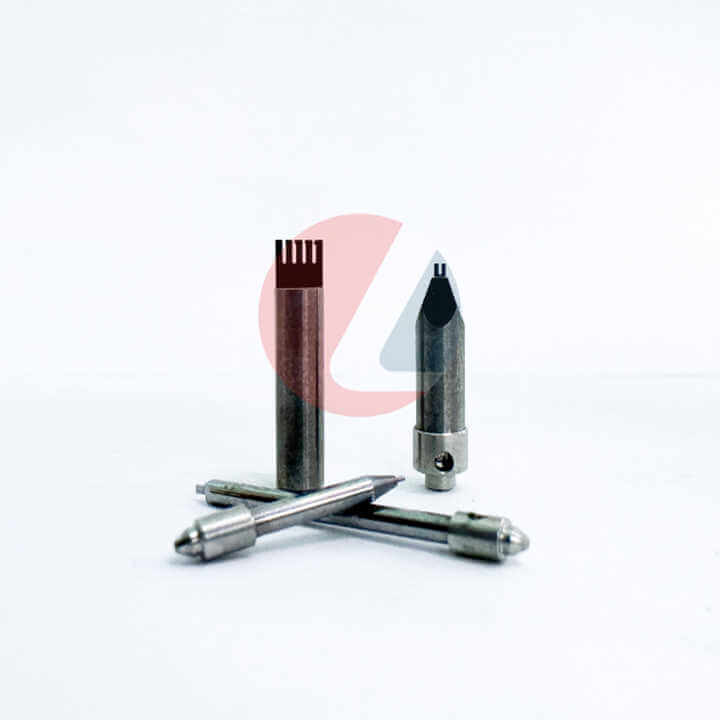
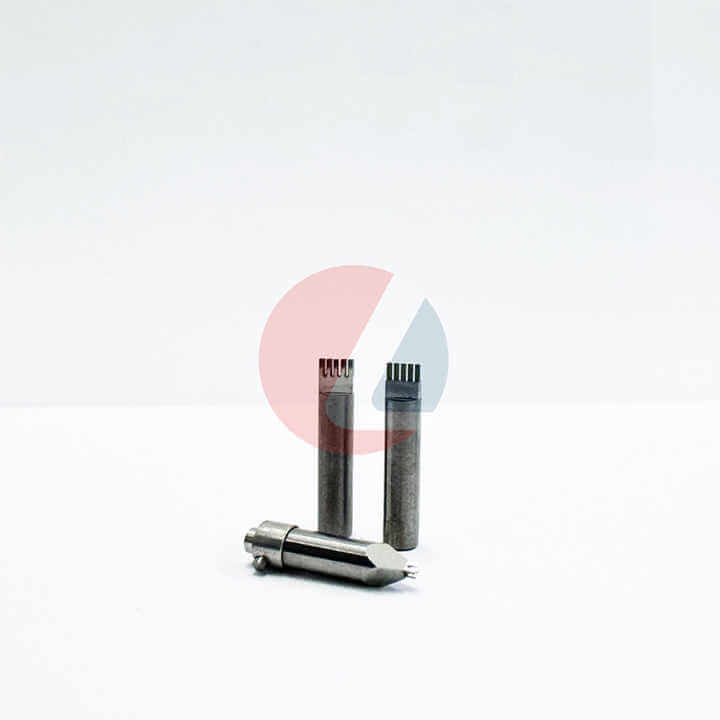
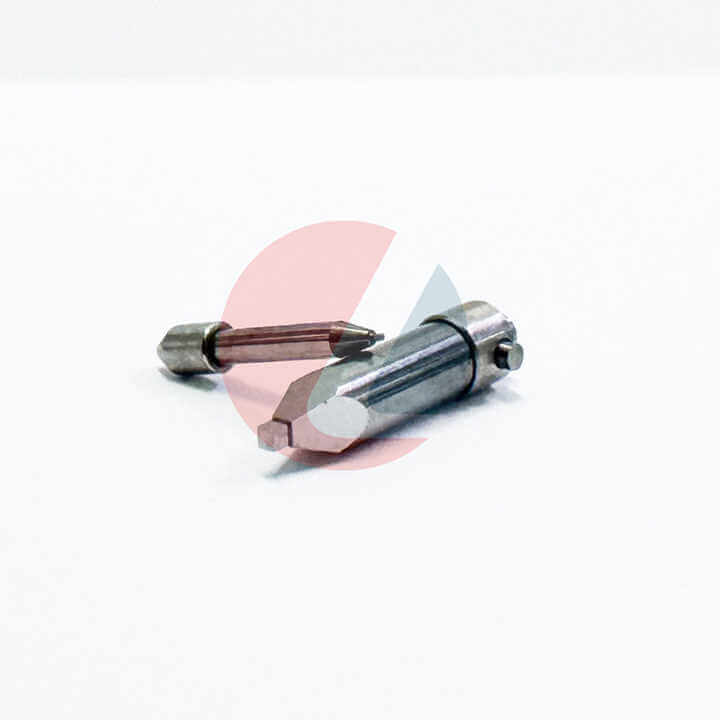
Customized Expoxy Stamping Pins
Hard, High Heat Resistance and Durable Material: Carbide (HRC 85)
Applicable Industries: Semicon Die Bond Flip Chip Machine
Carbide Epoxy Stamping Tools
Material selection is important because the stamping tool repeatedly contacts both the epoxy reservoir and target surface. Leader HiTech manufactures epoxy stamping tools using high-hardness carbide rated at approximately HRC 85 for suitable applications.
Carbide provides advantages such as high hardness, wear resistance, dimensional stability, heat resistance, long service life, and suitability for repeated precision stamping. These properties make carbide particularly useful in semiconductor environments where repeatability and tool durability are important.
Why Epoxy Stamping Tool Precision Matters
Epoxy volume and distribution play an important role in the die-attach process. If too much adhesive is transferred, it may spread beyond the intended bonding area, while insufficient adhesive can result in inadequate epoxy coverage for the application. A properly designed stamping tool helps ensure consistent epoxy transfer, controlled deposit size, repeatable stamping patterns, appropriate adhesive coverage, and reduced variation between stamping cycles.
This level of precision is especially critical when working with small semiconductor components or complex die configurations, where process consistency directly impacts bonding quality and manufacturing reliability.
How to Select the Right Epoxy Stamping Tool
Selecting an epoxy stamping tool should begin with the process requirements rather than simply choosing a standard tip. Several factors should be considered, including die dimensions, as the stamping pattern must match the actual bonding area, and epoxy viscosity, since material flow characteristics affect how the adhesive is picked up and transferred. The required epoxy coverage is also important, whether the application calls for a single dot, multiple points, or a broader deposition pattern.
In addition, tip geometry plays a key role, as round, flat, fork, and multi-pin designs produce different deposition characteristics. Shank dimensions must be compatible with the die-bonding equipment and tool holder, while production requirements such as repeatability, throughput, and expected tool life should also be evaluated. For specialised semiconductor applications, a custom-designed stamping tool may offer a more effective solution than modifying a standard stamping profile.
Frequently Asked Questions About Epoxy Stamping
What Is an Epoxy Stamping Tool?
An epoxy stamping tool, also known as an epoxy transfer tool, stamping pin, or printing tool, is used to transfer adhesive by dipping the tool tip into an epoxy reservoir and then contacting the designated bonding area. The epoxy adheres to the tool through surface tension before being transferred onto the substrate.
Unlike conventional needle dispensing, epoxy stamping is particularly suitable for applications that require controlled dot sizes, repeatable deposition patterns, or specialised adhesive coverage. In semiconductor manufacturing, this process is commonly used for die attach, semiconductor die bonding, flip-chip assembly, adhesive transfer, small-dot epoxy application, and patterned epoxy deposition.
The selection of the appropriate stamping tool depends on several factors, including die dimensions, epoxy viscosity, required bond-line coverage, machine configuration, and the desired stamping pattern to ensure consistent and reliable adhesive transfer.
How Does Epoxy Stamping Work?
The process generally involves three steps: epoxy pick-up, epoxy transfer, and die placement. During the epoxy pick-up stage, the stamping tool is lowered into a controlled epoxy reservoir or rotating cup, allowing a defined amount of adhesive to adhere to the stamping profile. The tool then moves to the substrate, leadframe, or target bonding location, where the adhesive is transferred onto the required area.
In the final step, the semiconductor die is placed onto the deposited epoxy during the die-bonding process. The amount and shape of epoxy transferred are influenced by several factors, including tip geometry, stamping depth, epoxy viscosity, tool surface condition, reservoir condition, process parameters, and the required deposition pattern.
As a result, selecting the right tool is crucial for maintaining process repeatability and preventing excessive or insufficient epoxy deposition.
How Does an Epoxy Stamping Tool Improve Die Bonding Accuracy?
An epoxy stamping tool improves die bonding accuracy by precisely dispensing epoxy in controlled patterns, ensuring even coverage and uniform thickness on the die surface.
This precision minimizes the risk of air pockets, uneven bonds, and material waste, leading to stronger, more reliable bonds. The tool’s customizable nozzles also allow for tailored dispensing, ensuring optimal application based on die size and design, further enhancing the overall bonding accuracy.
Can Epoxy Stamping Tools Be Customized for Complex Die Designs?
Yes, epoxy stamping tools can be fully customized to accommodate complex die designs. We offer a range of nozzle patterns tailored to specific applications, including intricate dispensing for irregular shapes or detailed patterns.
By adjusting the nozzle design, we can ensure that the epoxy is applied accurately, even for specialized or highly complex die geometries, making them versatile for various semiconductor manufacturing needs.
Why Are Carbide Epoxy Stamping Tools Preferred Over Steel Tools?
Carbide epoxy stamping tools offer higher hardness, superior wear resistance, and longer service life compared to traditional steel tools. This makes them ideal for high‑volume or repetitive stamping operations.
About LeaderRange Hitech Sdn Bhd
At LeaderRange HiTech, we specialize in providing high-performance epoxy stamping tools designed to meet the precise needs of the semiconductor industry. With a focus on quality and innovation, our tools ensure accurate and consistent epoxy dispensing for a wide range of die sizes and complex designs.
In addition to epoxy stamping tools, we also offer a range of precision accessories such as ejector pins, carbide tips, shear pins, and rubber tips, which are essential components in various stages of semiconductor assembly and testing.
Whether for standard or specialized applications, our epoxy stamping tools deliver reliable results, enhancing bonding accuracy and minimizing material waste. Committed to customer satisfaction, we offer customizable solutions tailored to your specific requirements, serving both local and international markets with excellence.