Why are Vespel collets widely used in semiconductor manufacturing, and what makes them so critical for precision handling applications?
In semiconductor production, where components are increasingly smaller, more delicate, and higher in value, even the smallest tooling choice can directly impact yield, reliability, and process stability.
In this article, we provide a clear and practical explanation of the Vespel collet, focusing on its role as a precision tool and pick up tool in the semiconductor industry.
You will learn what a Vespel collet is, why it is used, how it compares to other materials, and what factors engineers should consider when selecting one for advanced semiconductor processes.
The Importance of Precision Handling in Semiconductor Manufacturing
Semiconductor manufacturing involves handling fragile dies, wafers, and micro-components at extremely tight tolerances. Any contamination, electrostatic discharge, misalignment, or surface damage can result in costly defects.
Precision handling tools are therefore designed to:
- Grip components securely without damage
- Maintain dimensional stability under heat and stress
- Minimise contamination and particle generation
- Deliver consistent performance over repeated cycles
Within this context, the Vespel collet has become a trusted solution for high-precision pick-and-place and die bonding applications.
What Is a Vespel Collet?
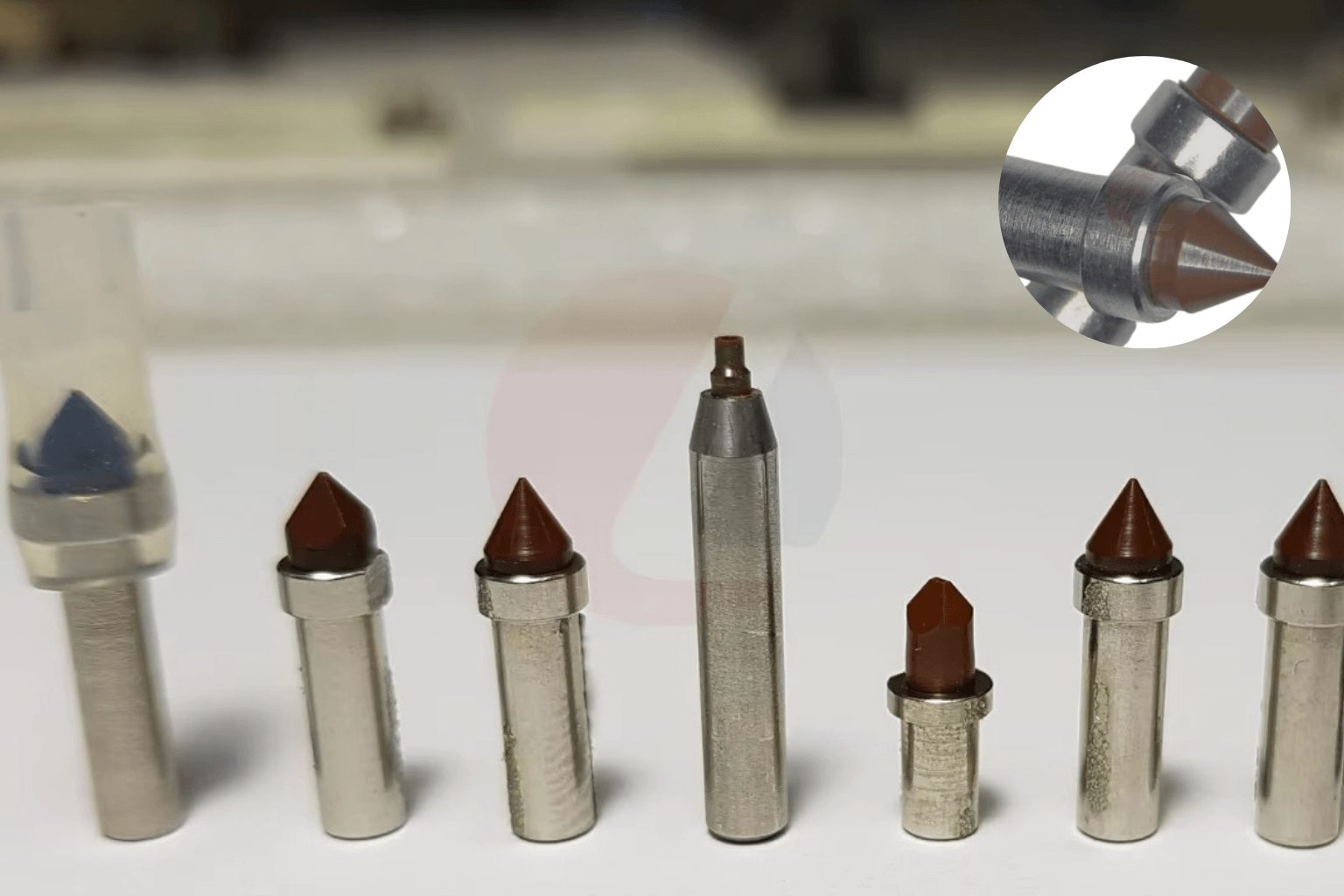
A Vespel collet is a specialised gripping component typically used in die bonding, pick-and-place, and micro-assembly operations. Unlike metal or rubber-based collets, Vespel collets are engineered to deliver a unique balance of:
- Mechanical strength
- Thermal resistance
- Dimensional stability
- Low outgassing properties
These characteristics make them particularly suitable for semiconductor environments where precision and cleanliness are non-negotiable.
Why Vespel Is Used in Semiconductor Precision Tools
Vespel is not chosen arbitrarily. Its material properties address several challenges common in semiconductor processes.
1. High Thermal Stability
Semiconductor manufacturing often involves elevated temperatures. Vespel maintains structural integrity and dimensional accuracy across a wide temperature range, reducing the risk of deformation during operation.
2. Excellent Wear Resistance
As a precision tool, a Vespel collet must endure repeated contact cycles without rapid degradation. Vespel offers superior wear resistance compared to many elastomeric or plastic alternatives.
3. Low Particle Generation
Cleanroom environments demand materials that do not shed particles. Vespel’s low abrasion characteristics help minimise contamination risks.
4. Electrical Insulation Properties
In sensitive semiconductor processes, electrical insulation is essential. Vespel’s dielectric properties reduce the risk of electrostatic discharge affecting delicate components.
The Role of Vespel Collets as Pick Up Tools
As a pick up tool, a Vespel collet is designed to lift, hold, and place semiconductor dies or components with high positional accuracy.
Key Functional Requirements
A Vespel pick up tool must:
- Grip securely without excessive force
- Maintain alignment during transfer
- Release components cleanly and consistently
The material’s inherent stiffness and surface properties allow engineers to design collets that meet these requirements without relying on excessive vacuum pressure or mechanical force.
Vespel Collet vs Other Collet Materials
Understanding how Vespel compares to alternative materials helps clarify its value.
Metal Collets
- High strength but risk of surface damage
- Conductive and less forgiving on delicate dies
Rubber or Elastomer Collets
- Softer grip but limited durability
- Degradation under heat and chemicals
Ceramic Collets
- Excellent thermal resistance
- Brittle and prone to chipping
Vespel Collets
- Balanced strength and compliance
- High thermal and chemical resistance
- Long service life with consistent performance
For many semiconductor applications, Vespel offers the most balanced solution.
Common Semiconductor Applications for Vespel Collets
Vespel collets are commonly used in:
- Die bonding operations
- Pick-and-place assembly lines
- Wafer-level packaging
- Microelectronic component handling
Their adaptability allows them to be customised for specific die sizes, shapes, and process conditions.
Design Considerations for Vespel Collets
When specifying a Vespel collet, engineers must consider more than just material choice.
Key Factors Include
- Die dimensions and tolerances
- Required gripping force
- Vacuum or mechanical holding method
- Operating temperature range
- Cycle frequency and wear expectations
Precision machining is critical, as even minor deviations can affect alignment and yield.
Maintenance and Lifespan
One of the advantages of Vespel collets is their predictable wear behaviour.
Maintenance Benefits
- Reduced frequency of replacement
- Stable gripping performance over time
- Lower risk of sudden failure
Routine inspection and proper cleaning help maximise lifespan and maintain consistent process quality.
Cost Considerations and Value
While Vespel collets may have a higher initial cost compared to basic alternatives, they often deliver greater long-term value.
This value comes from:
- Reduced downtime
- Lower defect rates
- Extended service life
- Improved process consistency
In high-value semiconductor production, these benefits typically outweigh the upfront investment.
Why Vespel Collets Are Trusted in the Semiconductor Industry
The semiconductor industry demands tools that perform reliably under extreme precision requirements. Vespel collets meet these demands by combining advanced material science with precision engineering.
Their continued use across die bonding and pick-and-place applications reflects industry confidence in their performance, durability, and cleanliness.
Conclusion: Precision Handling Starts with the Right Tool
Understanding the role of the Vespel collet is essential for engineers and manufacturers involved in semiconductor production. As a precision tool and pick up tool, it addresses critical challenges related to thermal stability, wear resistance, and contamination control.
When handling delicate semiconductor components, precision is not optional—it is fundamental.
By selecting the right materials and designs, such as Vespel collets, manufacturers can support higher yields, improved reliability, and long-term process efficiency in an increasingly demanding industry.
Explore Leader Range HiTech Vespel Collet for precise, reliable wafer handling.