Why does a replacement tool that “looks correct” sometimes fail to fit your bonder machine?
This is one of the most common—and costly—questions faced by semiconductor manufacturers when sourcing replacement tooling.
Whether you are purchasing ejector pins, pick up collets, epoxy stamping tools, shear tools, or other QA tools, compatibility is determined by interface and geometry rather than brand name alone.
For equipment platforms such as ASM, Kulicke & Soffa (KNS), and ESEC, the most critical factor is understanding how the tool physically interfaces with the machine.
This guide simplifies the often confusing world of semiconductor tooling compatibility. You will learn:
- Why tooling compatibility is governed by geometry
- What shank codes are and why they matter
- How different tooling categories follow different compatibility rules
- What buyers should verify to ensure plug-and-play performance
Why Qa Tooling Compatibility Matters in Semiconductor Manufacturing
In high-precision bonding processes, tooling is not interchangeable by assumption. A poorly matched tool can lead to:
- Inaccurate placement or bonding
- Increased wear on the machine head
- Calibration drift
- Reduced yield and higher defect rates
Tooling compatibility directly affects machine stability, process repeatability, and long-term reliability. Understanding compatibility fundamentals allows manufacturers to reduce downtime, avoid unnecessary reorders, and maintain consistent production quality.
The Core Principle: Tool Holder Interface Comes First
When buying replacement tools for ASM, KNS, or ESEC bonders, the Tool Holder Interface is the single most important factor.
The tool holder interface defines:
- How the tool is physically mounted
- How it is aligned within the machine head
- How securely it is clamped during operation
If the interface geometry is correct, the tool will fit—even if it was originally designed for a different brand or generation of machine.
Understanding Shank Codes (The Foundation of Compatibility)
Most semiconductor tools are held by a shank, also referred to as a shank style or shank code. This code defines the physical dimensions that allow the tool to be installed correctly.
A shank code typically specifies:
- Shank diameter
- Overall length
- Locking or retention method
If two tools share the same shank code, they are often mechanically interchangeable—even across different bonder platforms.
Tool Categories and Their Compatibility Keys
Different tooling categories rely on different aspects of the interface for compatibility.
| Tool Category | Critical Tooling Parts | Primary Compatibility Key |
| Die Bond Tools | Ejector Pins, Pick Up Collet, Epoxy Stamping Tools | Shank Style & Diameter |
| Wire Bond Tools | Capillaries (via holders), EFO Tips | Holder Code & Screw Type |
| QA Tools | Shear Tools, Wire Pull Hooks | Base Plate Mount & Pin/Screw Geometry |
Understanding which interface feature controls compatibility prevents costly mismatches during procurement.
Die Bond Tools: Geometry as the Key Factor
Ejector Pins
An ejector pin is commonly used to push a die upward during pick-and-place operations. Although machine platforms differ, many ejector pins across ASM, KNS, and ESEC machines share identical shank dimensions.
For example:
- An ejector pin used on an older KNS bonder may share the same shank geometry as one used on a newer ASM platform
- Compatibility depends on shank diameter, length, and retention—not the machine label
Pick Up Collet
A pick up collet is designed to grip and transfer dies with high positional accuracy. As with ejector pins, compatibility is governed by:
- Shank style
- Mounting depth
- Interface alignment
The correct shank ensures secure holding and minimal play during high-speed operation.
Epoxy Stamping Tools
Epoxy stamping tools follow similar rules. As long as the stamping tool’s shank matches the holder interface, it can be used across multiple platforms with consistent results.
Wire Bond Tools: Where Small Differences Matter
Wire bond tooling introduces additional variables due to clamping mechanisms and electrical functions.
EFO Tips
EFO (Electronic Flame-Off) tips are used to form the free air ball during wire bonding. While the main body may be compatible, the securing method often differs.
Key considerations include:
- Holder design
- Screw thread type
- Screw length
Capillary Holders
Capillaries themselves are held by a separate holder, making compatibility a function of:
- Holder code
- Fastener specification
This is where machine-specific variations are most common.
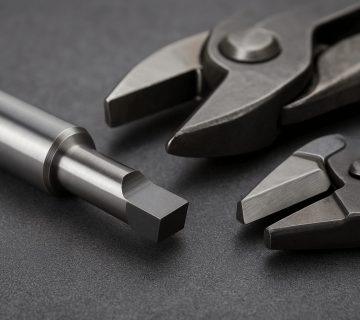
QA Tools: Shear Tools and Pull Hooks
Shear Tools
A shear tool used for wire bond shear test applications must meet strict alignment and mounting requirements. Compatibility is defined by:
- Base plate dimensions
- Mounting pin positions
- Screw or clamp geometry
Even small deviations can affect test accuracy and compliance with industry standards.
Wire Pull Hooks
Wire pull hooks also rely on precise mounting geometry to ensure repeatable test results. As with shear tools, compatibility depends more on mounting design than machine brand.
Machine-Specific Fasteners: The Small but Critical Difference
While the main tool body may be compatible, fasteners are often machine-specific.
Common examples include:
- Cap screws with slightly different thread sizes (e.g. M1.6 vs #080)
- Variation in screw length or head design
This is where experienced tooling suppliers add value by:
- Identifying the correct fastener for your exact machine model
- Supplying compatible tooling kits rather than individual components
Ignoring fastener differences can lead to poor clamping, vibration, or premature wear.
The Value of a Tooling Compatibility Matrix
Reputable tooling suppliers provide a Tooling Compatibility Matrix that cross-references:
- Machine model (e.g. ESEC 2100, KNS 1488, ASM AD8312)
- Tool type
- Shank or holder code
- Compatible replacement part numbers
This matrix enables true plug-and-play replacement, reducing trial-and-error and avoiding production delays.
Benefits of Understanding Tooling Compatibility
When tooling compatibility is properly understood and verified, manufacturers benefit from:
- Faster replacement cycles
- Reduced machine downtime
- Stable, repeatable process performance
- Lower total tooling cost
Most importantly, correct compatibility ensures tools fit securely with minimal play—allowing high-speed bonders to operate at their designed precision.
Key Takeaways for Buyers and Engineers
- Tooling compatibility is defined by geometry
- The Tool Holder Interface is the most critical factor
- Shank codes and holder codes matter more than machine names
- Fasteners are often the only truly machine-specific component
- A tooling compatibility matrix is essential for reliable sourcing
Conclusion: Compatibility Is a Precision Decision
Tooling compatibility does not need to be complex—but it must be understood correctly. For ASM, KNS, and ESEC platforms, success lies in focusing on the physical interface rather than the logo on the machine.
By identifying shank codes, verifying holder geometry, and working with knowledgeable tooling suppliers, manufacturers can achieve seamless integration, consistent quality, and long-term cost efficiency.
In semiconductor manufacturing, precision begins not only with the machine—but with the right tool, fitted the right way.
Looking for precision tools engineered to match your bonder’s exact interface requirements?
Explore compatible ejector pins, pick up collets, shear tools, and QA tooling at Leaderhitech.com.


)