
Key Takeaways
- Accurate shear testing depends on controlled variables such as tool alignment, shear height, and testing speed—small deviations can significantly affect results.
- Misinterpretation of data is a frequent issue, often caused by overlooking failure modes or inconsistent test setups.
- Standardisation and calibration are critical to ensure repeatable, reliable measurements in both ball shear tests and die shear strength evaluations.
How reliable are the strength measurements behind semiconductor devices that power modern electronics?
From smartphones to automotive systems, semiconductor components must meet strict mechanical integrity standards. Shear testing—particularly ball shear and die shear strength tests—is widely used to evaluate the robustness of bonds and interfaces within semiconductor packages. It plays a key role in detecting weak interconnections, ensuring product reliability, and maintaining manufacturing quality. However, the process is highly sensitive to inconsistencies.
Even minor errors, such as incorrect tool positioning or parameter settings, can produce misleading results, leading to faulty components passing inspection or reliable ones being unnecessarily rejected.
This article explores the most common errors in semiconductor shear testing and provides practical guidance on how to avoid them, helping engineers, quality control professionals, and manufacturers achieve more accurate and repeatable results.
Understanding Shear Testing in Semiconductor Applications
What is Shear Testing?
Shear testing measures the force required to break a bond by applying a lateral load parallel to the interface. In semiconductor manufacturing, it is commonly used for:
- Ball shear testing: Evaluating the strength of wire bonds (typically gold, copper, or aluminium).
- Die shear testing: Assessing the adhesion strength between a semiconductor die and its substrate.
Why It Matters
Reliable shear testing ensures:
- Structural integrity of semiconductor packages
- Long-term product reliability under thermal and mechanical stress
- Compliance with industry standards such as JEDEC
Common Errors in Shear Testing
1. Incorrect Shear Tool Height
The Issue
One of the most frequent errors is setting the shear tool at an improper height relative to the bond or die.
- Too high: May not properly engage the bond, leading to underestimation of strength
- Too low: Can damage the substrate or introduce additional friction, skewing results
How to Avoid It
- Follow standard guidelines (e.g., typically 2–5 µm above substrate for ball shear tests)
- Use automated systems with precise height control
- Regularly verify tool positioning with calibration samples
2. Misalignment of the Shear Tool
The Issue
Improper alignment between the shear tool and the test sample can result in:
- Uneven force distribution
- Premature or irregular failure modes
- Inconsistent test data
How to Avoid It
- Ensure proper visual alignment using high-magnification systems
- Perform routine equipment calibration
- Use fixtures designed for consistent sample positioning
3. Inconsistent Shear Speed
The Issue
Shear speed directly influences measured strength values. Variations can lead to:
- Higher speeds → artificially increased strength readings
- Lower speeds → potential creep effects and lower readings
How to Avoid It
- Maintain consistent shear speed across all tests
- Follow standardised test methods (e.g., JEDEC recommendations)
- Document and control speed parameters in test protocols
4. Poor Sample Preparation
The Issue
Contamination, oxidation, or mechanical damage during sample preparation can significantly affect results.
Common problems include:
- Surface contamination
- Improper handling
- Incomplete curing of adhesives
How to Avoid It
- Implement cleanroom handling procedures
- Ensure proper curing and processing before testing
- Inspect samples visually before testing
5. Ignoring Failure Mode Analysis
The Issue
Focusing solely on numerical results without analysing how the bond failed can lead to incorrect conclusions.
Typical failure modes:
- Ductile failure: Indicates good bonding
- Brittle failure: Suggests weak interfaces
- Interfacial failure: Often signals process issues
How to Avoid It
- Use microscopy (optical or SEM) to examine failure surfaces
- Categorise failure modes systematically
- Combine force data with failure analysis for accurate interpretation
6. Equipment Calibration Errors
The Issue
Uncalibrated or poorly maintained equipment can produce unreliable force measurements.
How to Avoid It
- Perform routine calibration using certified standards
- Schedule preventive maintenance
- Keep calibration records for traceability
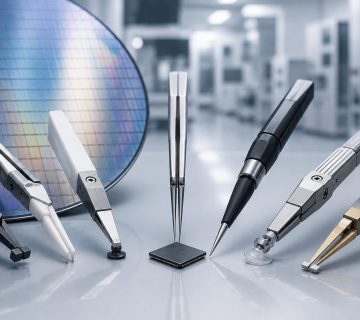
7. Incorrect Shear Tool Selection
The Issue
Using the wrong tool geometry or material can affect how force is applied.
- Oversized tools may damage surrounding structures
- Undersized tools may not fully engage the bond
How to Avoid It
- Select tools appropriate for bond size and type
- Follow manufacturer recommendations
- Replace worn or damaged tools promptly
8. Environmental Factors
The Issue
Temperature and humidity can influence material properties and test outcomes.
How to Avoid It
- Conduct tests in controlled environments
- Monitor and record environmental conditions
- Avoid testing under fluctuating conditions
9. Data Interpretation Errors
The Issue
Even when tests are conducted correctly, misinterpreting results can lead to poor decisions.
Examples include:
- Comparing results across inconsistent setups
- Ignoring statistical variation
- Overlooking outliers
How to Avoid It
- Use statistical analysis (e.g., mean, standard deviation)
- Ensure consistent test conditions for comparison
- Train personnel in data interpretation
Best Practices for Reliable Shear Testing
To minimise errors and improve consistency, consider implementing the following best practices:
Standardisation
- Follow recognised standards such as JEDEC
- Develop internal standard operating procedures (SOPs)
Automation
- Use automated shear testers for precision and repeatability
- Reduce human error in positioning and measurement
Training
- Ensure operators are well-trained in both testing and analysis
- Conduct regular refresher sessions
Documentation
- Record all parameters, including tool height, speed, and environment
- Maintain traceability for quality audits
Emerging Trends in Shear Testing
As semiconductor packaging evolves (e.g., advanced packaging, 3D ICs), shear testing is also advancing:
- Higher precision equipment for micro-scale testing
- Integrated imaging systems for real-time failure analysis
- AI-driven analytics to detect patterns and anomalies
These developments aim to further reduce errors and enhance reliability in increasingly complex semiconductor structures.
Conclusion
Shear testing remains a cornerstone of semiconductor quality assurance, providing critical insights into bond integrity and structural reliability. However, its effectiveness depends heavily on precision, consistency, and proper interpretation.
Common errors—ranging from incorrect tool height and misalignment to poor data analysis—can compromise results and lead to costly consequences in production and performance. By understanding these pitfalls and implementing robust testing protocols, manufacturers can significantly improve accuracy and reliability.
Final Thoughts & Next Steps
If your organisation relies on semiconductor testing, now is the time to evaluate your current shear testing processes.
- Are your procedures fully standardised?
- Is your equipment regularly calibrated?
- Are your results interpreted with both data and failure analysis in mind?
Addressing these questions can help you optimise testing accuracy and strengthen overall product quality.
For more advanced insights or tailored solutions, consider consulting a precision tooling manufacturer specializing in semiconductor testing systems and methodologies.