Key Takeaways
- Pick up tools are precision components used to handle, transfer, and place semiconductor dies during manufacturing.
- They rely on vacuum or contact-based mechanisms to ensure safe and accurate positioning.
- Choosing the right tool improves yield, reliability, and contamination control in semiconductor processes.
What exactly is a pick up tool, and why is it essential in modern manufacturing?
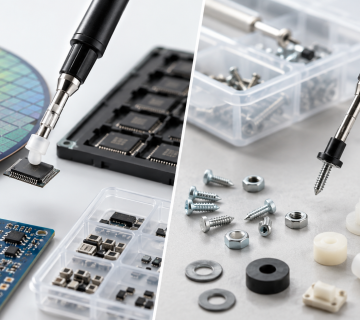
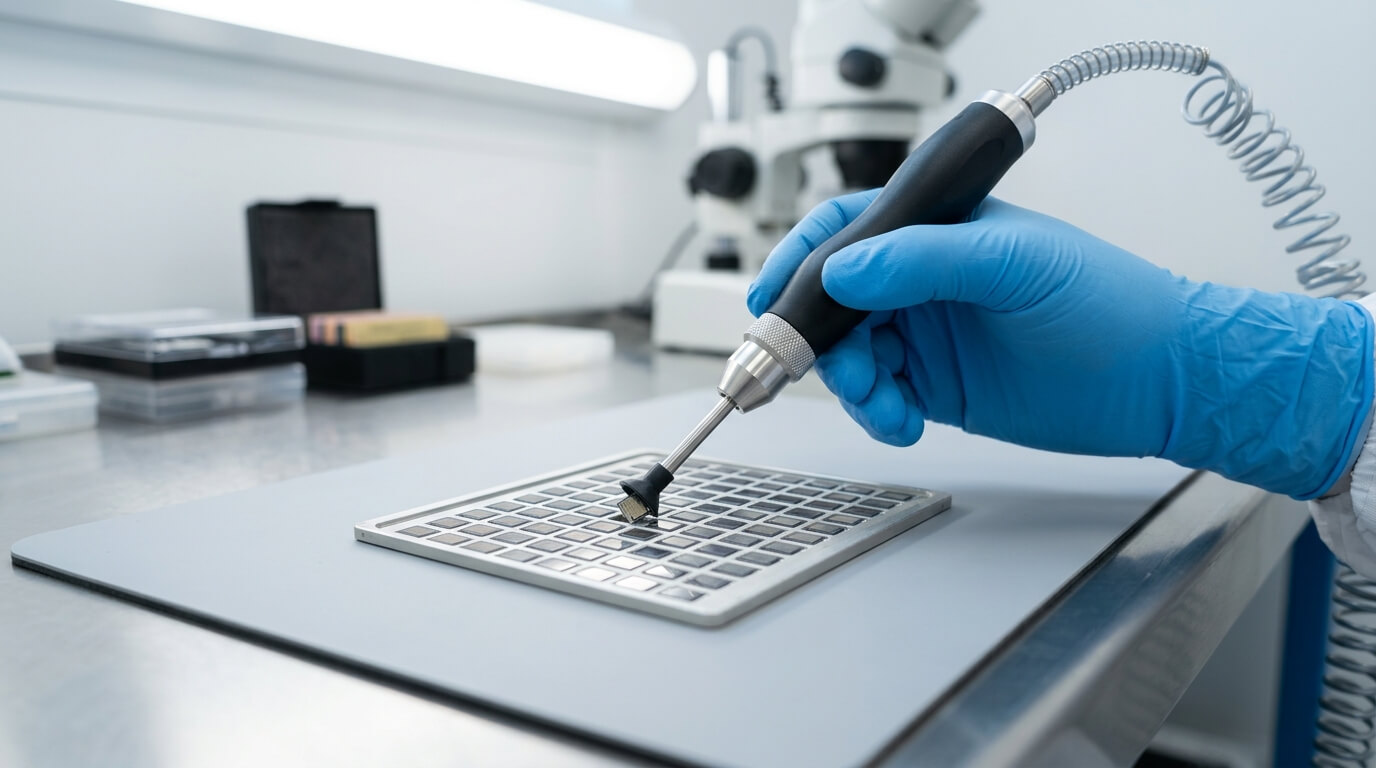
A pick up tool is a specialised device designed to lift, hold, and transfer small components with high precision. While the term can apply broadly, in semiconductor manufacturing it refers to tools used to handle delicate silicon dies during processes such as die attach and pick-and-place operations.
These tools are critical because semiconductor dies are extremely small, fragile, and sensitive to contamination. Using the right pick up tool ensures accurate placement, protects the die surface, and maintains production efficiency.
What Is a Pick Up Tool?
A pick up tool in semiconductor manufacturing is a precision-engineered component used to retrieve and position semiconductor dies during assembly.
Typically, the process works as follows:
- The die is lifted from wafer tape using an ejector mechanism
- A vacuum pick up tool holds the die securely
- The die is transferred and placed onto a substrate or package
These tools are essential in die bonding and packaging, where accurate placement directly impacts device performance.
How Pick Up Tools Work?
Pick up tools operate using either vacuum suction or contact-based gripping, depending on the application.
Key working mechanism:
- Die ejection
The die is pushed upward from wafer tape using ejector pins - Vacuum engagement
The pick up tool uses vacuum pressure to hold the die securely - Transfer and placement
The die is moved and accurately placed onto a substrate or package
Vacuum-based tools are widely used because they minimise mechanical stress and reduce contamination risks during handling.
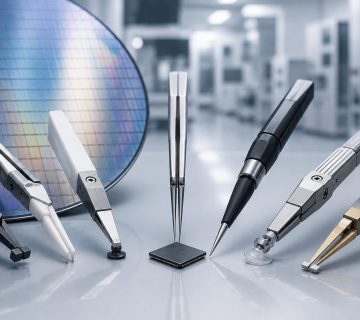
What are the Types of Pick Up Tools?
1. Vacuum Pick Up Tools
- Use suction to hold the die
- Ideal for delicate and high-precision applications
- Common in automated die attach machines
These are widely used in semiconductor assembly for reliable die transfer and placement.
2. Contact Pick Up Tools
- Use physical contact (flat or shaped tips)
- Suitable for specific die geometries or processes
- Often used in thermo-compression or epoxy die attach
3. Hybrid Pick Up Tools
- Combine material benefits (e.g. durability + precision)
- Offer balanced performance for demanding environments
Learn about types of precision tools in semiconductor manufacturing sector.
Materials Used in Pick Up Tools
Material selection plays a critical role in performance and durability.
Tungsten carbide
- High strength and wear resistance
- Suitable for high-force applications
Engineering plastics (e.g. POM, PI, PAI)
- Lower risk of scratching
- Good for fragile or thin dies
Alloy and stainless steels
- High temperature resistance
- Durable under repeated cycles
Each material is selected based on:
- Die sensitivity
- Temperature conditions
- Required lifespan
Applications in Semiconductor Manufacturing
Pick up tools are used across multiple stages of semiconductor production.
1. Die Attach Process
Pick up tools transfer dies from wafer tape to substrates during packaging.
This step is critical because improper handling can lead to:
- Misalignment
- Surface damage
- Reduced product reliability
2. Pick-and-Place Operations
Used in automated systems to position components with high speed and precision.
These tools enable:
- High throughput
- Consistent placement accuracy
- Reduced manual handling
3. Wafer Handling and Transfer
Pick up tools move dies between different equipment such as:
- Deposition systems
- Etching machines
- Inspection stations
Pick Up Tool vs Die Collet
| Feature | Pick Up Tool | Die Collet |
|---|---|---|
| Function | General die handling | Specialised vacuum gripping |
| Mechanism | Contact or vacuum | Primarily vacuum-based |
| Application | Flexible use | Die bonding specific |
| Precision | High | Very high |
👉 In many systems, die collets are considered a specialised type of pick up tool used for high-precision operations.
Why Pick Up Tools Matter in Semiconductor Manufacturing
Pick up tools directly influence:
✅ Yield and quality
Accurate placement reduces defects and improves consistency
✅ Contamination control
Proper tools minimise particle transfer and surface damage
✅ Process efficiency
Reliable tools support high-speed automation. Even minor variations in tool design can impact final product performance, especially in advanced packaging technologies.
How to Choose the Right Pick Up Tool
Selecting the right tool depends on several factors:
1. Application Type
- Die attach
- Pick-and-place
- High-temperature processes
2. Material Compatibility
Ensure the tool material does not damage or contaminate the die
3. Geometry and Design
- Tip shape
- Contact area
- Alignment precision
4. Force and Precision Requirements
Different processes require different levels of control and accuracy
5. Equipment Compatibility
Tools must match your machine specifications and setup
Best Practices for Using Pick Up Tools
- Regularly inspect for wear or damage
- Maintain clean tool surfaces
- Calibrate vacuum and alignment systems
- Replace tools based on usage cycles
These practices ensure consistent performance and reduce process variability.
Conclusion
Pick up tools play a vital role in semiconductor manufacturing by enabling precise handling, transfer, and placement of delicate components. From die attach to pick-and-place operations, these tools ensure accuracy, efficiency, and product reliability.
Choosing the right pick up tool—based on material, design, and application—can significantly improve manufacturing outcomes and reduce defects. As semiconductor technologies continue to advance, the demand for high-performance, precision-engineered pick up tools will only grow.
Not all pick up tools are the same—explore the key differences between semiconductor and industrial shear pins to better understand how precision tools impact performance: 👉 Read More: Shear Pins in Semiconductor vs. Industrial Shear Pins
Contact LeaderRange HiTech Sdn Bhd for more details.
Pick Up Tools FAQs
A pick up tool is used to lift, hold, and transfer small components such as semiconductor dies during manufacturing and assembly processes.
They use controlled vacuum or contact mechanisms to minimise stress and avoid scratching or contamination.
A vacuum pick up tool is a type of pick up tool that uses suction to hold components securely. Read about differences between Ejector Needles vs. Vacuum Pick-Up Tools.
High precision ensures accurate placement, which directly affects semiconductor performance and reliability.